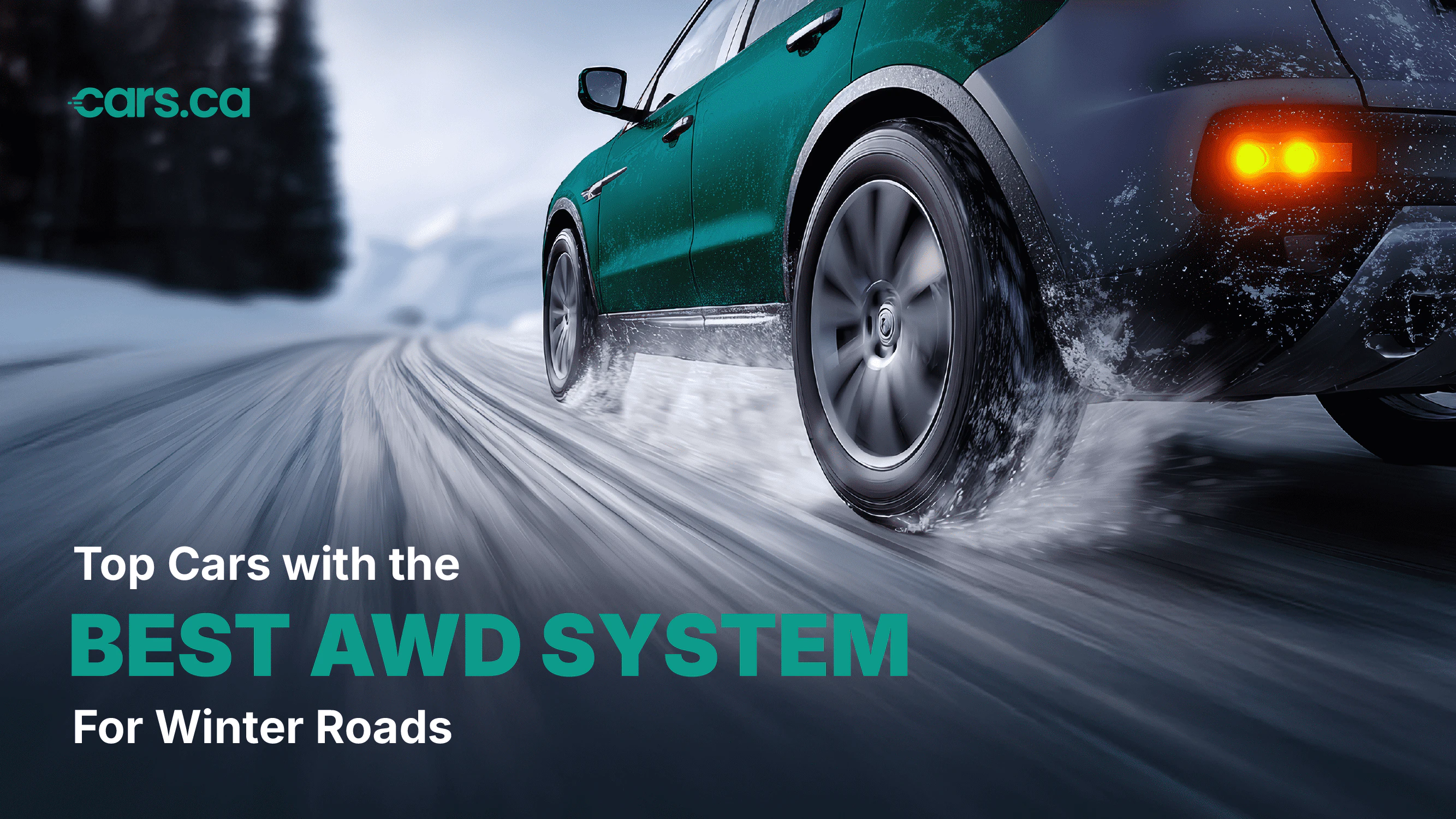
Top Cars with the Best AWD System For Winter Roads

Best All-Wheel Drive Cars for Winter Driving in 2026
If you’ve ever driven on an icy road after a fresh snowfall and felt your car struggle for grip, you already know how important traction is during the Canadian winter. Between snow-covered side streets, slushy highways, and black ice patches, winter driving can test even the most confident drivers. This is exactly why you need an AWD system—making all the difference in your winter driving by distributing torque equally between all four wheels for better traction. The right AWD car doesn’t just help you get moving—it helps you stay in control, feel safer, and enjoy improved responsiveness and stability on slippery roads. Below, find out how 4WD systems work, why they matter for winter driving, along with a list of top AWD cars, including the 2026 Honda CR-V, 2026 Subaru Forester and the 2026 Toyota Highlander, giving you confidence over all kinds of winter terrains.
What is an AWD System and Why is it Important for Winter Driving?
An AWD (All-Wheel Drive) or 4WD (Four-Wheel Drive) system helps automatically distribute power equally to all four wheels (rather than just the front or rear wheels) to provide extra traction and stability on different kinds of roads, especially slippery or icy terrain. It may not sound like a big deal, but in practice, this system makes a huge difference in winter driving, where snow, black ice, slush, and ice make the roads unpredictable and unsafe. Unlike standard two-wheel drive vehicles, AWD helps prevent wheel spin, improves handling around corners, and gives you more confidence when accelerating or braking in winter conditions. Anyone who’s well-versed with Canadian weather and how challenging the winter roads get during those extreme conditions would agree that a reliable AWD system doesn’t just provide convenience but also the essential safety you need for you and your family.


Top AWD Cars for Winter Roads
Here are some of the best AWD cars available in the market, chosen for their reliability, safety features, winter-ready performance, and, most importantly, for their incredible all-wheel drive system:
2026 Subaru Forester with Subaru Symmetrical Full-Time AWD system and X-MODE
The 2026 Subaru Forester comes standard with the Subaru Symmetrical Full-Time AWD system, which delivers optimal traction on challenging terrain for confident driving. The available dual-function version of the X-MODE tailors your performance to specific driving conditions—like the ones you need on snow.
2026 Honda CR-V with Real Time AWD with Intelligent Control System
Designed to automatically distribute torque equally to all four wheels, the available Real Time AWD with Intelligent Control System helps you stay focused on winter roads by increasing responsiveness and driving confidence when loss of traction is detected.
2026 Mazda CX-5 with i-Activ AWD
The standard i-Activ AWD system of the Mazda CX-5 performs about 200 calculations per second to determine the ideal torque distribution between the front and rear wheels for quick response, ensuring a well-balanced, smooth ride. This system keeps an eye on wiper operation, exterior temperature, torque consumption by the front wheels, and engine load to learn about road and weather conditions and adjust the SUV’s performance accordingly.
2026 Jeep Wrangler with Selec-Trac 4×4 System
Cater to different driving conditions, and traction needs with the automatic, full-time all-wheel drive system—Selec-Trac 4×4—that automatically shifts the Jeep Wrangler from two-wheel drive to four-wheel drive for better traction, balance and optimum performance.
2026 Toyota Highlander Hybrid with Electronic On-Demand All Wheel Drive
On the Highlander Hybrid models, you have the Electronic On-Demand AWD that takes 100 percent of torque from the front wheels and evenly splits it between the front and rear wheels to improve traction when the roads get slippery and challenging to maneuver in winter.
2026 Ford Bronco with Advanced 4×4 Automatic On-Demand with G.O.A.T. Modes
The Ford Bronco features an Advanced 4×4 system that uses built-in sensors to automatically send power to all four wheels for instant traction on slippery conditions, including black ice, rain and loose surfaces—without needing to switch modes manually. But in case you want to switch modes, you have up to seven G.O.A.T (Goes Over Any Type of Terrain): Normal, Eco, Sport, Slippery, Sand/Snow, Mud/Ruts and Rock Crawl or Baja, allowing you to customize the performance as per the terrain conditions.
FAQs About AWD Cars
1. What is an AWD system?
An all-wheel-drive or four-wheel-drive system equally distributes torque to all four wheels for better traction and control on slippery, snowy winter roads.
2. Do all-wheel drive cars use more fuel?
In most cases, yes. AWD vehicles use more gas than 2WD cars because power is sent to all four wheels rather than just two.
3. Is AWD or 4WD better for winter driving?
All-wheel drive is definitely a better choice for winter driving. It works automatically and is designed especially to meet the demanding requirements of winter terrains.
4. How does an AWD system work?
An AWD system automatically distributes engine power between the front and rear wheels, if needed, sometimes side to side, too, based on road conditions.
5. Do I still need winter tires if I have AWD?
Preferably, yes! For added safety in slippery conditions, plus improved braking and turning, you should have winter tires paired with an AWD system.
Find SUVs, Trucks, and Sedans Perfect for Winter Driving at Cars.ca
Knowing the right snow-ready car can make all the difference in winter driving, and finding one shouldn’t be complicated, especially with Cars.ca, bringing a wide range of vehicles at the best prices at your fingertips. Our marketplace helps you find a range of exclusive deals from top OEMs, including GMC, Chevrolet, Honda, Toyota, Hyundai, Nissan, and Cadillac, near you and across Canada. Make car shopping simple and stress-free—start exploring Cars.ca today!


